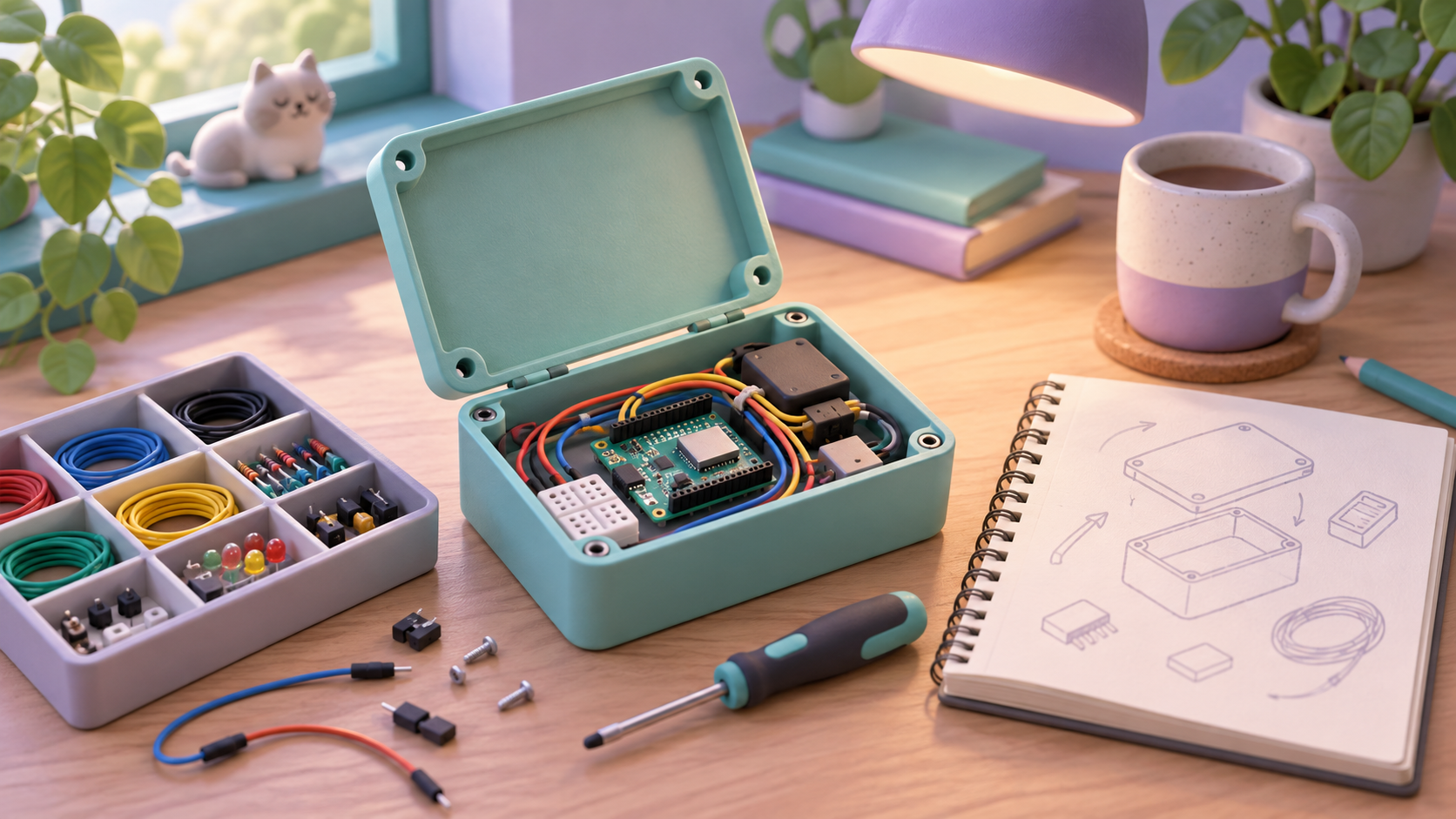
The prototype looked finished after I placed it in a box. This was a visual improvement and an administrative fiction.
The box contained the same unresolved question as the open desk arrangement, now with a lid. I had mistaken enclosure for completion. The outside was tidy enough to make the inside seem more settled than it was.
I wrote a small status note before putting the project away: what works, what remains to check, where the current notes live and what I should do first next time. Four plain lines gave the future version of me more useful information than the polished outside.
I also put the spare parts in a separate labeled compartment. They were not automatically part of the current build simply because they had attended the same evening. Keeping them distinct helped me understand which version of the experiment I was looking at.
The note changed how I described the object to friends. Here is a prototype I am still checking was more accurate than here is the finished thing. An attractive box does not need to become a promise the project cannot keep.
This has made me more comfortable pausing. I can leave a question unresolved without allowing it to dissolve into the general category of probably fine. The next session starts with a recognizable task rather than an optimistic archaeology of my own desk.
The box is still useful. It protects the project during storage and keeps the relevant objects together. I simply ask it to be a box, while the status note does the work of telling me where I actually stopped.
A thought worth keeping?