I wanted a little light that told me something at my desk. At no point did I feel a deep longing for another account, a new dashboard or a relationship with an unidentified cloud.
This is a preference, not a technical claim about every connected lamp. Sometimes a remote feature has a useful job. I just want the feature to introduce itself before the product introduces an entire administration system.
The latest arguments about AI-powered development make a familiar temptation louder: once a feature is easy to add, it starts behaving as though somebody asked for it. My tiny project can apparently have a portal now. That does not establish why the portal should exist.
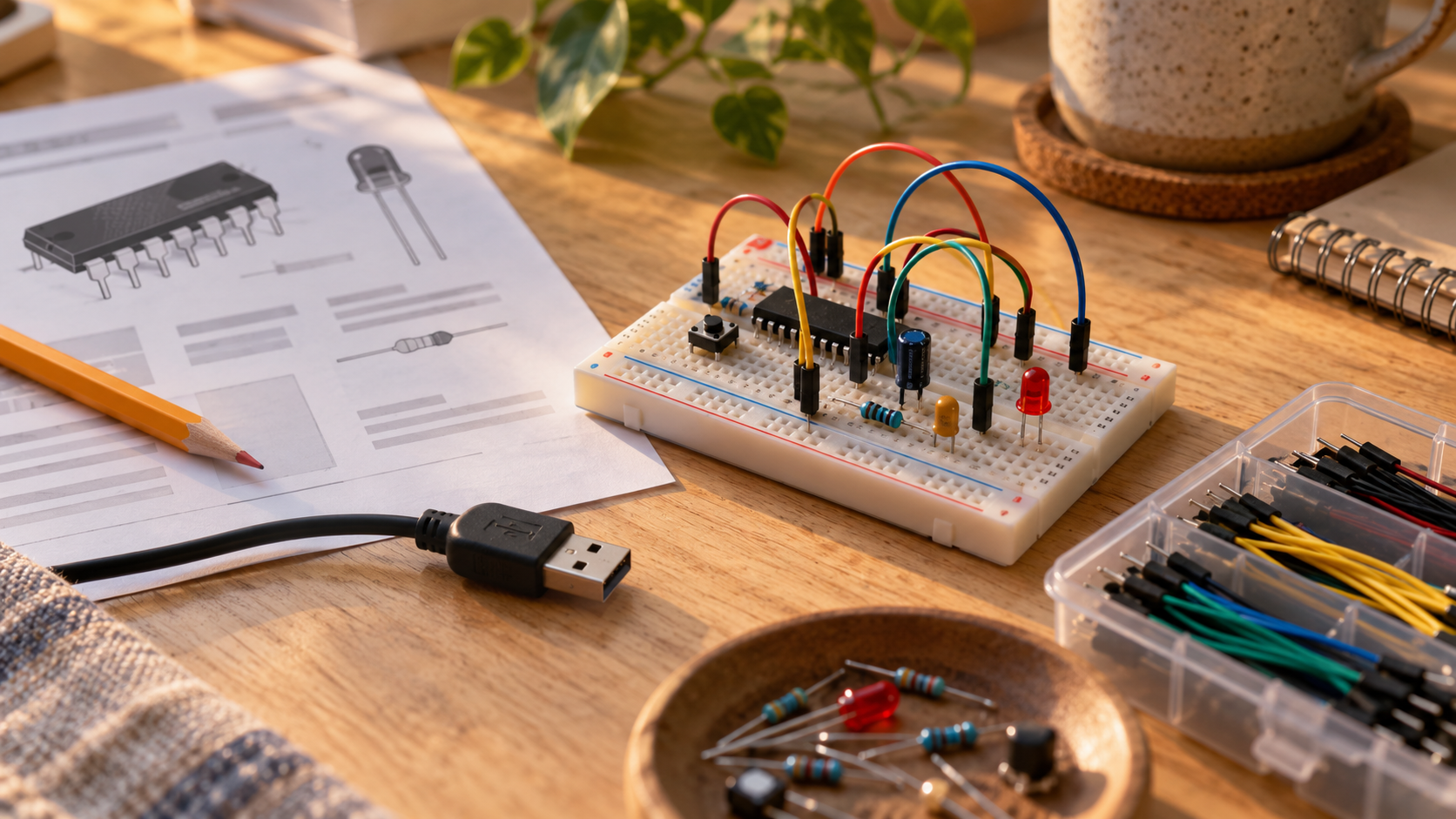
At my Austin desk, I like objects whose behavior I can describe on an index card. This switch does this. This indicator means that. These are the parts. Here is the question I have not answered. It is a comfortable scale for a weekend experiment.
If I add a network connection, the explanation grows. Where does information go? What happens when the connection is absent? Who operates the other end? Which permission is needed for the actual feature? OWASP's discussion of unnecessary capabilities is about agents, but it gives me a useful question for any ambitious interface: did the task ask for this power?
I would rather keep a modest object than expand its obligations until the hobby becomes technical support for my own house. A clever option is still an option. I can admire it and decline it.
The lamp is allowed to remain a lamp. The box can stay small. My future self will already have enough questions about where I put the spare parts; she does not need a password-reset email from the light.

A thought worth keeping?