The answer was neatly formatted. The connections were described with confidence. The part on my desk had a marking that did not agree with the description. At that point the chatbot had lost its imaginary seat on the approval committee.
I work in technical support, which has made me suspicious of any answer that sounds clearer than the problem has been described. A label, a version or a missing detail can change what the answer means. My electronics hobby brings that habit to a very small desk.
The current discussion about AI output being used without adequate control is mostly about software. I think the same responsibility question belongs beside a hobby project: who checks the proposed explanation against the actual thing?
These notes concern modest, unpowered, low-voltage project planning. They are not a wiring tutorial. The point is the checking habit, not a set of connections for someone to copy from a picture.
First I describe the object I actually have
Before asking for help, I want the part's exact marking and the documentation that belongs to it. I want to distinguish what I read from what I inferred. I want to know which assumption the proposed answer depends on. A plausible description of a similar part can be more confusing than an obvious failure because it takes longer to notice the mismatch.
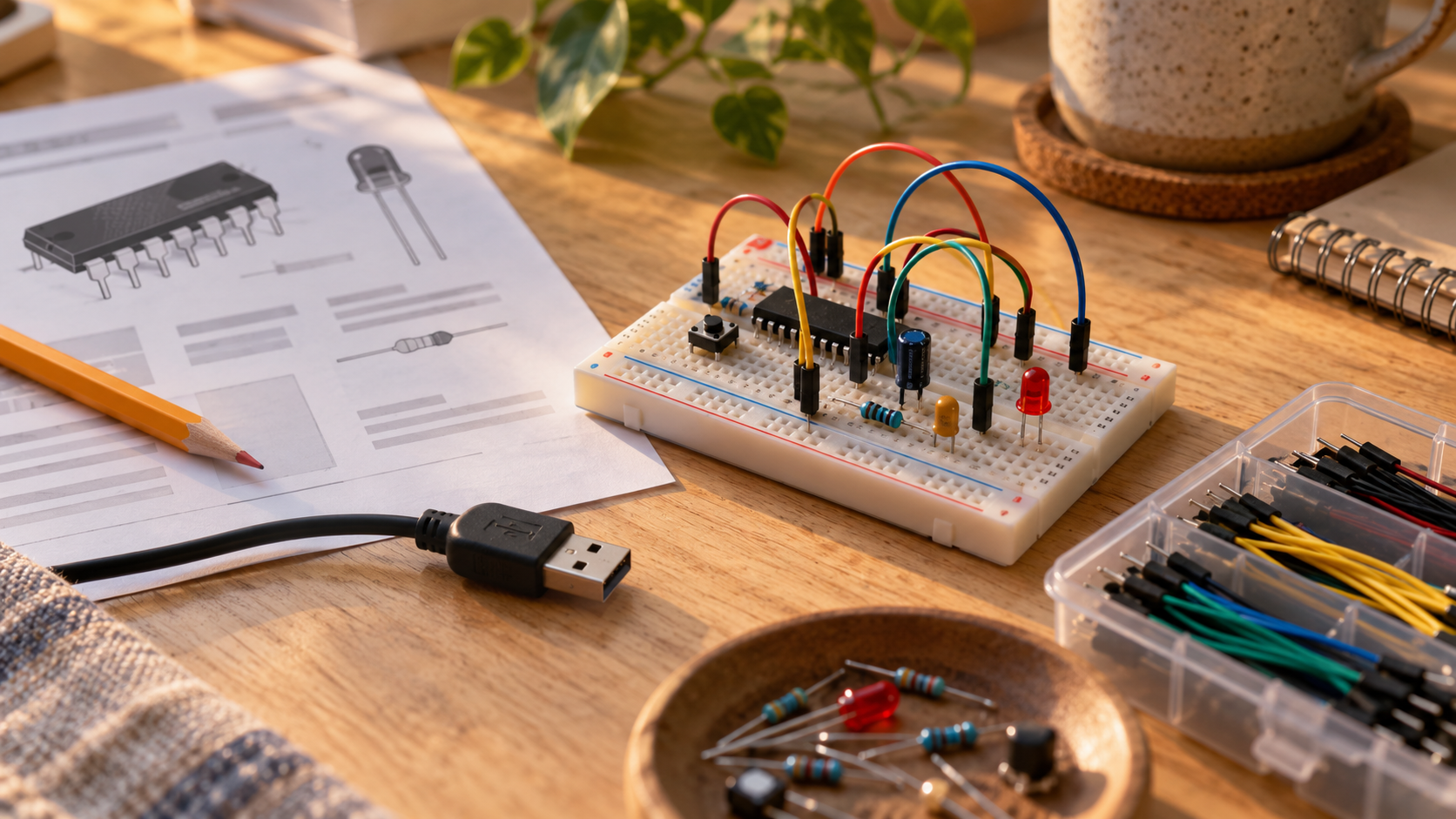
For a fictional desk indicator project, my first notebook page would contain the parts, the intended behavior and the unresolved questions. A second page could contain a proposed approach. Keeping those pages separate makes it harder for the proposal to rewrite the original facts without my noticing.
If an assistant offers an explanation, I can compare it with the relevant documentation while everything remains disconnected. Where do they agree? Where does the explanation omit a condition? Which number or label would I need to verify before considering the next step? If I cannot resolve a discrepancy, generating a more confident paragraph is not progress.
This is not a special penalty for an AI tool. An online tutorial, an old note and a friendly person's recollection can all describe the wrong variant. The object does not care who supplied the mistake. It will continue being the object on the desk.
Use the assistant where the result is checkable
There are small jobs for which I like the idea of assistance. Organizing notes. Turning my description of a failed experiment into a list of questions. Explaining a term so that I know what to look up in the documentation. Helping me compare two written accounts after I have made the source material clear.
Those uses can reduce friction without pretending the tool has examined the hardware. I can ask for a draft of the questions and still own the answer to them.
The less useful pattern is to keep prompting until the uncertainty disappears from the wording. A smoother sentence can make me feel calmer without resolving the underlying mismatch. My future self does not benefit from that feeling when she opens the notebook next weekend.
I want the uncertainty left in the note: this marking is unclear; this description may refer to another version; this part of the plan is not ready. That is useful information. It tells me where to resume instead of giving me a tidy fiction about having finished.
The desk remains unplugged while I compare the sources. The pencil stays beside the part. The chatbot can help me think of a question. It does not get to sign the answer on my behalf.

A thought worth keeping?